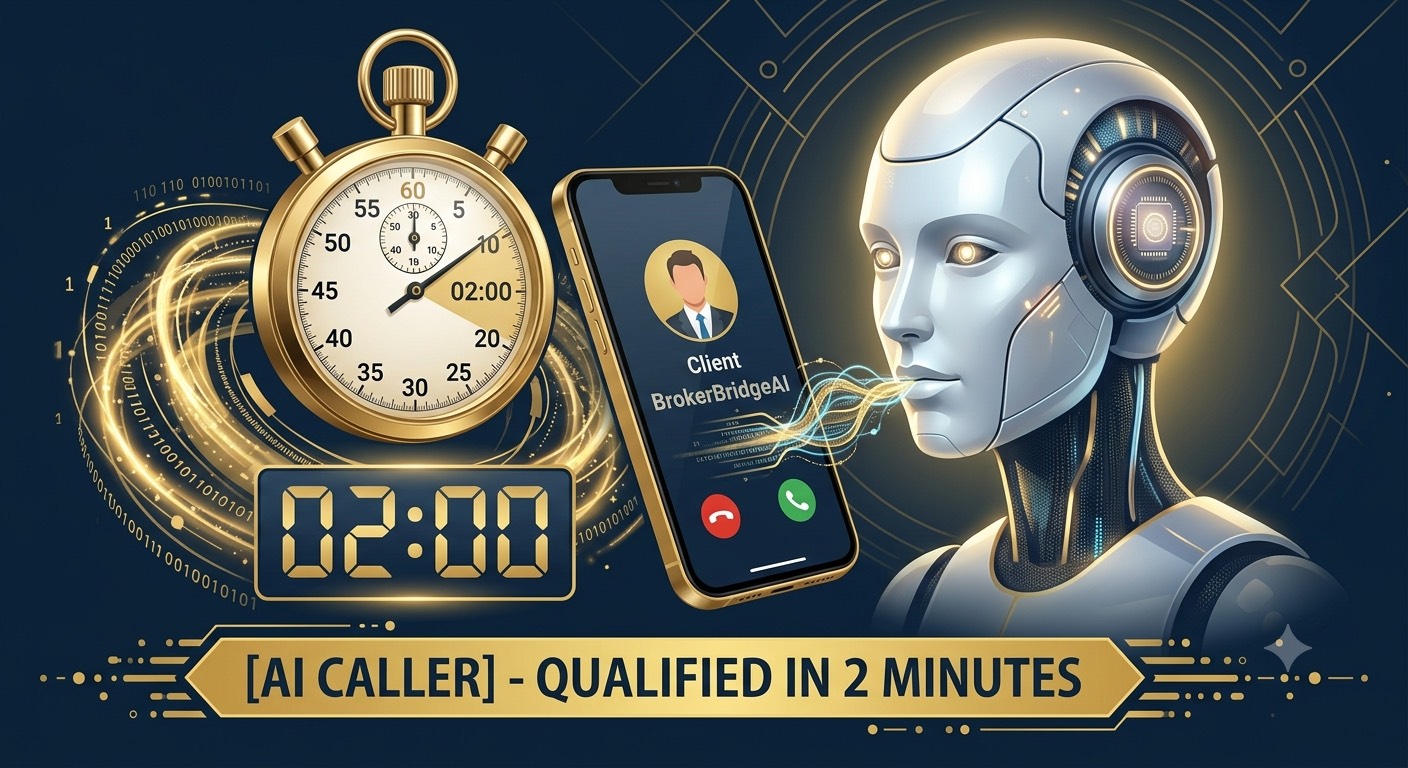
Ask any agent why a lead went quiet and you'll hear the same answers: they were just browsing, they weren't serious, the market is slow. In reality, most leads go cold for a far more boring reason — nobody got back to them while they still cared.
A lead's interest has a shelf life
When someone fills in a form at 20:40 on a Tuesday, they are in buying mode right at that moment. By the next morning they've enquired with three other agents, scrolled past twenty more listings, and moved on with their week. Nothing about them changed — the window simply closed.
- The average agent replies to a web lead in hours, not minutes.
- Most enquiries come in outside working hours, when nobody is available to call.
- A lead that isn't contacted on day one is usually never contacted properly at all.
Why manual follow-up always breaks down
It isn't a discipline problem. You are showing homes, sitting in a bond meeting, or driving between appointments. Follow-up loses to whatever is physically in front of you, every single time. And the more leads you generate, the worse the leak gets — which is why agents often see no return from ad spend that is actually working.
What AI follow-up actually does
An AI caller picks up the job the moment a lead lands. It phones within minutes, introduces itself honestly, asks a handful of qualifying questions — area, budget, timeline, buying or selling — and either books a call into your diary or marks the lead for nurture.
The nurture side matters just as much
Not every lead is ready today. AI DM and WhatsApp nurture keeps a light, human-sounding conversation going over the following weeks, so when they are ready, you are the agent they already know.
What changes in practice
- Every lead is contacted, not just the ones you had time for.
- Your diary fills with qualified conversations instead of dead numbers.
- You stop paying for ads whose leads never got a call back.
You don't have a lead problem. You have a response-time problem — and that one is fixable.